Startup Valuation Documents Checklist: Financial, Ownership and Business Records
Startup valuation documents checklist guidance covers financial statements, ownership records, business plans, contracts and operating evidence; StartupConsultant.Business.in reviews these records for business valuation, financial valuation and shares valuation.
What Documents Support a Startup Valuation?
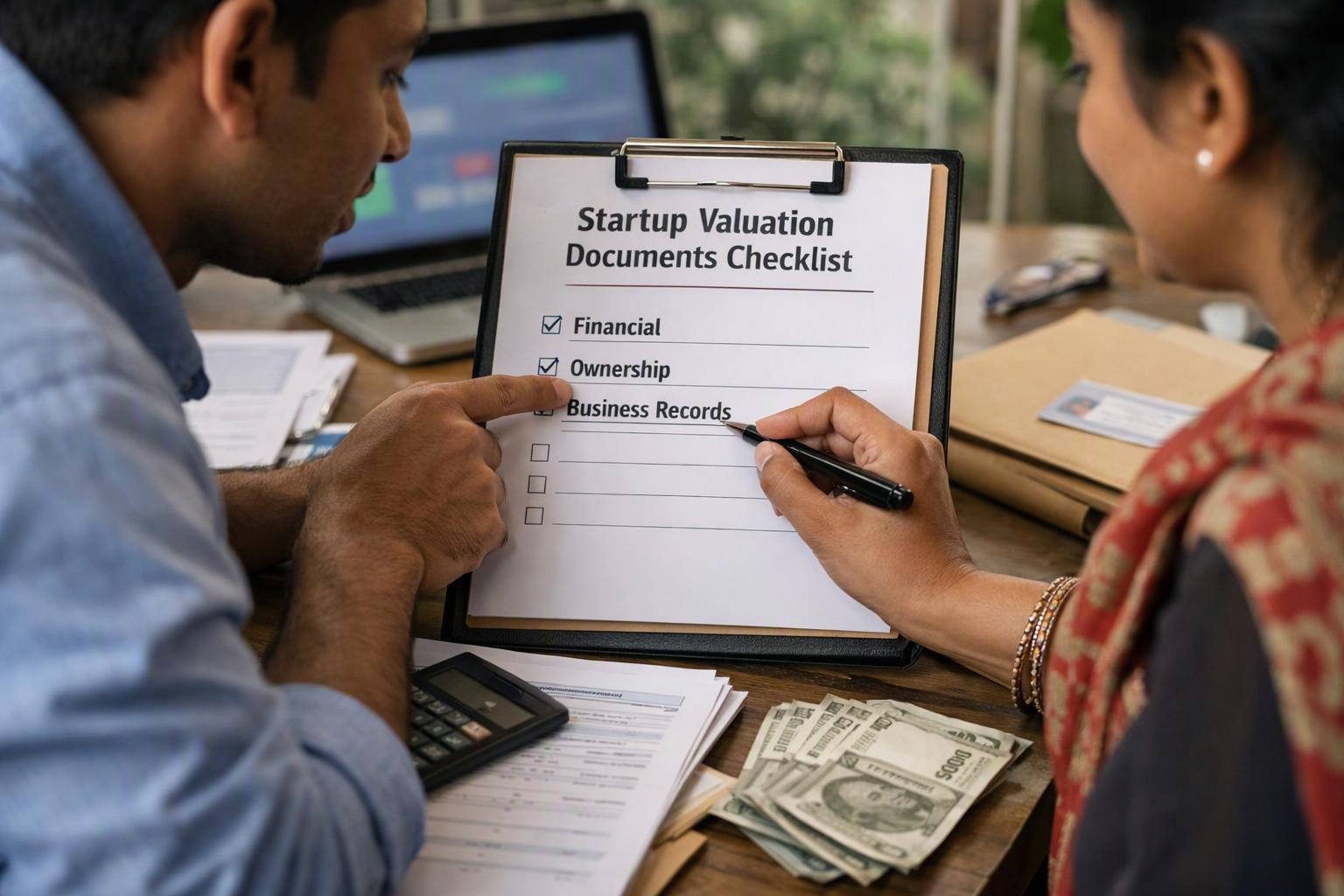
Startup valuation documents support the analysis of financial performance, ownership rights, business prospects and valuation assumptions. StartupConsultant.Business.in reviews financial records, ownership records and business records against the valuation purpose.
The document set should explain historical financial performance, the current financial position and the evidence behind future projections. It should also show the ownership structure, key risks and the rights attached to shares or other instruments.
Before the Valuation: Prepare Your Core Records
Before a valuation begins, the company should organise its core records around the valuation objective. We use a clear document trail so that the analysis can be traced back to approved and current information.
Which Financial Records Should a Startup Provide?
Financial records should show historical performance, current financial position, cash movements and management assumptions about future performance. Our team checks whether the records tell a consistent story about revenue, operating expenses, assets, liabilities and working capital.
Useful records include the profit and loss statement, balance sheet, cash flow statement, bank statements, revenue records and expense records. Financial projections, budgets and tax records help us assess the link between past results and future projections.
Revenue records should explain recurring revenue, one-off sales and customer contracts. Expense records should support the assumptions used in the financial model, including expected operating expenses and funding needs.
During the Valuation: Validate Ownership and Capital Structure
During the valuation, the capitalisation table should agree with the shareholding pattern, legal records and agreements. We reconcile the records so that founder shares, investor rights and possible equity dilution are reflected correctly.
Why Do Business Records Matter to Startup Value?
Business records matter because they show how the startup creates revenue, protects its assets, manages risk and supports future growth assumptions. We use these records to test whether the business plan and revenue model are supported by operating evidence.
Important records cover customer concentration, intellectual property, technology assets, commercial contracts, key employees, market evidence and regulatory records. Intellectual property ownership should be clear, while customer contracts should support claims about recurring revenue and retention.
Commercial contracts can reveal renewal terms, termination rights, pricing obligations and dependence on key customers. Regulatory records can show whether compliance duties affect the business model, market access or future projections.
After the Valuation: Review the Evidence and Assumptions
After the analysis, the valuation report should clearly state the valuation date, valuation method, assumptions and adjustments. We review the report against the supporting evidence and the management representation before the final review.
Which Documents Commonly Delay a Startup Valuation?
Document gaps can delay a valuation because they make ownership, performance or future projections harder to verify. We flag the issue early and identify the record needed to support the relevant conclusion.
How StartupConsultant.Business.in Uses the Checklist
StartupConsultant.Business.in uses the checklist to organise evidence, examine valuation assumptions and match the records to the requested Business valuation, Financial valuation or Shares valuation.
Our team starts by confirming the valuation purpose, valuation date and ownership structure. We then review the financial model, business records and capital structure before selecting and applying the appropriate valuation methodology.
We explain the supporting evidence, key assumptions and material adjustments in the valuation report. Free Consultations are available to discuss the records needed for the assignment, and our pricing discussion reflects the scope and complexity of the work.
Our team is licensed ((IBBI - SFA) IBBI/RV/11/2021/14432) and has 5 years in business. We provide upfront pricing after reviewing the requested work and available information.
What Should You Send With a Valuation Enquiry?
A valuation enquiry should include the valuation purpose, relevant date, company background and the available financial, ownership and business records. We use this starting information to understand the scope and identify the documents that need closer review.
Send the company profile, financial statements, management accounts, cash flow information, financial projections, capitalisation table, shareholding pattern, shareholder agreement and relevant share records. Business plans, revenue model details, intellectual property records, commercial contracts and customer information can help us assess the operating evidence.
Include your contact details so we can discuss the requested Business valuation, Financial valuation or Shares valuation. StartupConsultant.Business.in can review the enquiry and explain the next steps for preparing the valuation file.
Questions About Startup Valuation Documents
Do startups need audited financial statements for valuation?
Audited financial statements are not always required for a startup valuation because the need depends on the valuation purpose, reporting history and available evidence. StartupConsultant.Business.in reviews the financial statements, management accounts and supporting records that are relevant to the assignment.
Should a startup include intellectual property records in a valuation document checklist?
Yes, intellectual property records should be included when the startup's value depends on technology, brands, software, designs or other protected assets. Ownership documents, development records and relevant agreements help us assess the asset and its connection to future revenue.
What ownership documents are needed for a startup shares valuation?
A startup shares valuation needs the capitalisation table, shareholding pattern, share classes, transfer records, option scheme, convertible instruments and shareholder agreement. These records help us assess ownership rights, dilution and the terms attached to each interest.
Can incomplete financial projections affect a startup valuation?
Yes, incomplete financial projections can affect a startup valuation because they make future revenue, expenses, cash flow and working capital assumptions harder to test. We connect projections to the business plan, financial records, customer evidence and management explanations.
Author: Gaurav Maheshwari
Startup valuation documents are strongest when financial, ownership and business evidence supports the same valuation conclusion. Contact StartupConsultant.Business.in for Free Consultations and a structured review of your valuation records.